
Optimizing Welding Parameters: A Complete Guide
Learn how welding manufacturing companies can boost weld quality, reduce rework, and increase production efficiency with smart welding parameters.
12/11/20257 min read
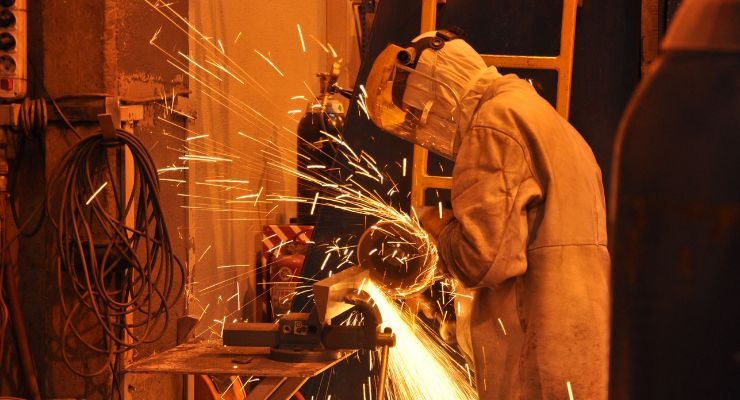
In a fast-paced environment, it is tempting to stick with welding settings based on instinct. But here is the uncomfortable truth: unoptimized welding parameters are a silent killer of quality, efficiency, and profit.
This comprehensive guide walks you through everything you need to know about welding parameter optimization, why it matters, what to optimize, how to do it, and how it transforms your bottom line.
The Hidden Cost of "Good Enough" Welding
Most workshop managers assume that if a weld looks acceptable, it is acceptable. But this assumption costs fabricators thousands of rupees every single month.
Here is what unoptimized parameters do to your operation:
Rework & Scrap: Quality Failures Disguised as Normal
When the parameters are not optimized, you face a cascade of quality issues:
Too Little Heat
Lack of fusion between base metal and filler
Incomplete penetration (weak root pass)
Joint fails under load despite looking okay.
Rejection at inspection or—worse—failure in the field
Too Much Heat
Burn-through on thin materials (instant scrap)
Excessive spatter requiring cleanup labour.
Distortion and warping (especially on long seams)
Material degradation and loss of mechanical properties
Reduced Production Efficiency: The Throughput Killer
Unoptimized parameters do not just affect quality—they destroy productivity.
How Poor Parameters Kill Throughput:
Slow Travel Speed
Parameters set too conservatively to avoid burn-through.
Results in 2-3 minutes per weld instead of 1.5-2 minutes
Across 500 welds/month = 250-500 lost hours
Ties up equipment and operators unnecessarily.
Constant Parameter Adjustments
Arc feels unstable, so operator stops to fiddle with amperage.
Adjusts voltage, checks stick out, restarts.
Breaks the rhythm and flow of the work.
One operator adjusting = production line slowing down
Extended Cycle Times
More arc time per weld = more consumables burned
More time per joint = fewer joints completed per shift
Misses production targets, delays customer delivery
Frustrated operators, compressed timelines, quality shortcuts
The Throughput Impact:
Optimizing parameters does not require hiring more staff. It requires smarter parameter selection, and the payoff is immediate.
Compromised Weld Integrity: The Invisible Enemy
This is the scariest consequence and the one that most fabricators underestimate.
"The final product might look fine, but incorrect parameters can create invisible defects like porosity or a brittle heat-affected zone (HAZ), leading to catastrophic failure in the field."
Porosity (Trapped Gas Pockets)
Caused by low gas flow, contaminated joints, faster travel speeds.
Not visible to the naked eye without X-ray
Reduces tensile strength by 15-30%
Fails under dynamic loading or thermal cycling.
Field failure = liability nightmare
Brittle Heat-Affected Zone (HAZ)
Caused by excessive or poorly managed heat input.
Material in heat-affected zone loses ductility.
Fails under impact or stress cycles.
Often fails after weeks/months of service (not immediately)
Customer discovers the problem during inspection, not you.
Cold Cracks
Caused by rapid cooling after welding.
Micro-fractures develop in base metal or HAZ.
Grow under repeated stress cycles.
Can trigger structural failure years after fabrication.
The Prevention:
Proper parameter optimization can prevent 99%+ of these hidden defects. It is insurance against catastrophic failure and, its cheap insurance compared to the alternative.
Higher Consumable Costs: The Profit Bleed
Unoptimized parameters waste money in ways most shops do not even track.
Excessive Amperage
Burns through wire faster (more amps = faster wire feed requirement)
Increases filler metal consumption per weld by 10-15%
Shorter wire spools used = higher consumable costs
Over 10,000 welds/month = thousands in extra wire cost
Incorrect Gas Flow Rate
Too high = wasting shielding gas (CFH set above necessity)
Too low = poor shielding = porosity = rework
Either direction = cost overrun
Typical waste: 15-20% of gas budget
Poor Electrode Stickout
Tip degradation accelerates with poor stickout consistency.
Frequent tip replacements (every 8-10 hours vs. 15-20 hours)
Inefficient Travel Speed
Slow speed = more arc time = more consumables burned per weld
Cumulative across hundreds/thousands of welds
Monthly consumable budget inflates 10-20%
What Is Welding Parameter Optimization?
Definition:
Welding parameter optimization is the critical process of precisely adjusting multiple variables to find the "sweet spot" for manufacturing success and weld integrity.
In plain language:
It means systematically dialling in your welding machine settings so that every weld is strong, consistent, fast to produce, and uses minimal consumables.
The 6 Critical Parameters You Must Control
Amperage (Current)
What it controls: Heat intensity and penetration depth
Too low: Weak fusion, incomplete penetration, cold welds
Too high: Burn-through, excessive spatter, metal degradation
Sweet spot: Full penetration without excess, typically 150-250A for FCAW
Voltage
What it controls: Arc length and weld bead width
Too low: Short, stumpy arc, poor weld profile
Too high: Long arc, excessive spatter, poor fusion
Sweet spot: Stable arc producing consistent bead, typically 22-28V.
Wire Feed Speed (Deposition Rate)
What it controls: The amount of filler metal deposited per unit time
Too slow: Incomplete fusion, insufficient material
Too fast: Excess material, weak welds, poor penetration
Sweet spot: Consistent, smooth material deposition (typically 300-500 IPM)
Travel Speed
What it controls: How fast the torch moves along the joint
Too slow: Heat damage, distortion, wide HAZ, burn-through on thin material.
Too fast: Incomplete fusion, poor penetration, inconsistent bead
Sweet spot: Full fusion with proper bead profile (typically 4-8 IPM for FCAW)
Gas Flow Rate
What it controls: Shielding of the weld pool from atmospheric contamination
Too low: Porosity, spatter, unstable arc (atmospheric gas gets in)
Too high: Waste, turbulence, still-inadequate shielding
Sweet spot: Complete protection without excess (typically 18-25 CFH for FCAW)
Electrode Stickout (Tip-to-Work Distance)
What it controls: Arc behaviour and heat distribution
Too short: Arc too intense, unstable behaviour, excessive heat
Too long: Unstable arc, poor contact resistance, inconsistent welds
Sweet spot: Consistent distance maintained (typically 6-10mm for FCAW)
The Interdependency:
These 6 parameters work together. Increasing your travel speed can help offset excessive amperage to some degree. Poor gas flow creates problems that show up as spatter but need stickout adjustment to fix.
True optimization means tuning all six together for your specific material, joint configuration, and welding process.
How to Optimize Your Welding Parameters: A Systematic Approach
Optimization is not random trial-and-error. It is a disciplined, repeatable process.
Step 1: Start With a Baseline (Your WPS)
What you need:
Welding Procedure Specification (WPS) for your material and joint type
If you do not have one, work with your wire supplier (Ultramet provides free WPS consultation)
Document the starting values for all six parameters.
Why it matters:
You need a known starting point. Random adjustments lead to chaos.
Step 2: Weld a Test Sample (3-5 test pieces minimum)
What to do:
Weld test coupons using your baseline parameters.
Let them cool naturally (do not quench)
Observe arc behaviour during welding (smooth? Jumping? Spitting?)
Examine bead profile after cooling (even width? Consistent height? Minimal spatter?)
What to document:
Arc behaviour (your subjective feel—smooth, stable, etc.)
Bead appearance (profile, spatter, colour)
Any issues observed (porosity, incomplete fusion, etc.)
Step 3: Evaluate & Diagnose
Ask these questions:
Is penetration full (visual inspection, ideally verified with bend test)?
Is there excessive spatter (cleanup labour waste)?
Is the bead profile consistent and even?
Does the arc feel smooth and stable?
Are there any visible defects (cracks, porosity, undercut)?
What defects tell you:
Step 4: Adjust ONE Parameter Only
Critical rule: Never adjust multiple parameters at once. You will not know which change fixed the problem.
Adjustment strategy:
If issue is penetration: Increase amperage by +10A, test again.
If issue is spatter: Decrease amperage by -10A, test again.
If issue is bead consistency: Focus on operator technique (stickout, travel speed consistency)
If issue is porosity: Increase gas flow by 2-3 CFH or clean the joint better.
Step 5: Re-Test & Compare
What to do:
Weld 2-3 new test pieces with adjusted parameter
Observe differences vs. previous test.
Evaluate improvement (or regression)
Repeat adjustment if needed.
Be patient: Most optimization requires 2-3 iterations per job type. This is normal and expected.
Step 6: Lock It In & Standardize
Once you have found the sweet spot:
Document the final parameters for this specific material/joint combo.
Create a laminated reference card for your workstation.
Train all operators to these exact parameters
No deviation-consistency is the entire point.
Monitor for parameter drift over time.
Documentation template:
Common Parameter Optimization Mistakes
Mistake #1: Treating Parameters as "Set and Forget"
The error: Optimize parameters once, then assume they are valid forever.
The reality: Parameters can drift due to machine wear, material variation, operator technique changes, etc.
The fix: Review and verify parameters quarterly. Spot-check with test welds monthly.
Mistake #2: Blaming Operator Technique When It is Parameters
The error: "Your technique is bad" when the real issue is poor parameter selection.
The reality: A good operator cannot overcome bad parameters. A bad operator with great parameters will produce decent welds.
The fix: Always verify parameters first, then coach technique.
Mistake #3: Optimizing for Speed at the Expense of Quality
The error: Pushing travel speeds too fast to maximize throughput, sacrificing penetration.
The reality: Fast travel + incomplete fusion = high rework rate = net loss in throughput.
The fix: Optimize for quality first (full penetration, minimal defects), then speed naturally follows.
Mistake #4: One-Size-Fits-All Parameters
The error: Using the same parameters for mild steel, high-strength steel, stainless, etc.
The reality: Each material has unique heat characteristics and requires different parameters.
The fix: Develop material-specific and joint-specific parameters. Maintain a reference library.
Mistake #5: Not Accounting for Preheat & Interpass Temperature
The error: Optimizing arc parameters while ignoring thermal management.
The reality: Heat-affected zone brittleness comes from thermal cycling, not arc parameters alone.
The fix: Manage preheat (typically 50-150°C for high-strength steel), interpass temperature, and cooling rate. These are part of optimization.
The Operator's Optimization Toolkit
Every welder should have:
Laminated parameter card at their workstation (material, joint, settings)
Electrode stickout gauge to verify tip-to-work distance.
Arc monitoring awareness (does the arc sound/look stable?)
Defect recognition training (what does porosity/burn-through/cold crack look like?)
Access to technical support (who do I call when something feels wrong?)
Using the Right Wire: How Ultramet Welds Supports Optimization
Here is an often-overlooked truth: bad wire forces you to chase parameters endlessly.
Good wire (like Ultramet) makes optimization faster and easier.
Ultramet Welds Advantages:
Consistent Chemical Composition
Every spool behaves predictably.
Parameters developed on one spool work on the next
No surprises or drift
Predictable Arc Characteristics
Smooth, stable arc with optimized parameters
Less spatter = easier to fine-tune
Easier to maintain consistency across operators.
Recommended Parameters Included
Not guessing—clear starting point
Tailored to your material and joint type.
Professional WPS support available.
Technical Support Included
Free parameter consultation
Real-time troubleshooting
Training for your team
Application-Specific Grades
Engineered for structural steel, shipbuilding, heavy engineering.
Not generic optimized for your industry
Bottom line: When your wire is consistent, your parameters can be too. When parameters are dependable, your welds are predictable.
Why Welding Parameter Optimization Matters for Welding Manufacturing Companies
For large-scale welding manufacturing companies, parameter optimization is not just a technical improvement, it is a strategic advantage. In high-volume production environments, even a small deviation in amperage, voltage, or travel speed can multiply into massive rework, increased consumable waste, inconsistent weld quality, and production delays. Companies operating in sectors such as heavy fabrication, automotive structures, shipbuilding, and industrial equipment rely heavily on standardized, repeatable weld performance. By implementing a disciplined optimization system, welding manufacturing companies can reduce defect rates, improve weld integrity, shorten cycle times, and maintain consistent output across multiple machines and operators. The result is stronger products, higher profitability, and a more reliable production line.


Get in Touch with Ultramet Welds
If you’re looking for high-quality hardfacing welding wire or hardfacing flux-cored wire, Ultramet Welds offers the right solution backed by technical expertise and proven results.
Registered Office
17, Chiman Bagh,
Subhash Marg
Indore (M.P) 452007
India
info@ultrametwelds.com
www.ultrametwelds.com

Plant
D4, Tejas Industrial Park,
Nemawar Road,
Indore (M.P) 452016
India

image from pngtree.com

mig welding wire manufacturer saw flux manufacturer india stainless steel welding wire welding wire suppliers co2 welding wire manufacturers wire welding with argon gas welding manufacturing companies mig welding wire mig wire supplier flux cored wire manufacturerhardfacing welding wirewelding stainless steel with flux core wireflux cored wire suppliersflux cored stainless mig wireflux cored wire manufacturer in indiaflux cored wire manufacturershardfacing welding wirehardfacing flux cored wire
Copyright ©2026 Ultramet Welds Pvt Ltd. All Rights Reserved